Adorely

Reference

Anniversary years, what each is called, and which date is actually yours

By Pash, founder of Adorely · Updated 15 September 2026 · 5 min read

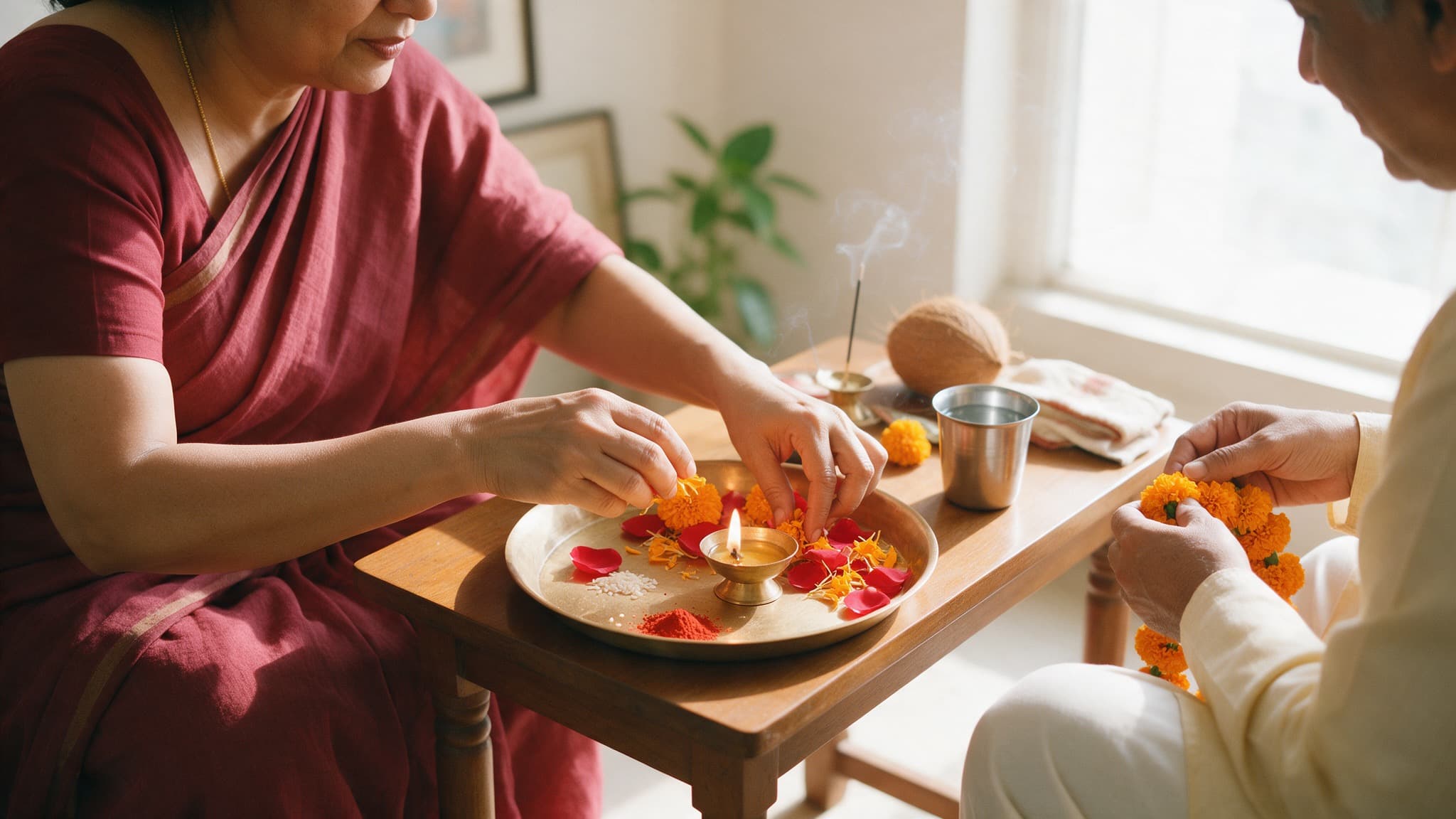
A brass thali with a lit diya and marigold petals being laid out for an anniversary puja at home

The short answers first. The twenty fifth is silver, the fiftieth is golden and the sixtieth is diamond. The fortieth is ruby and the forty fifth sapphire. Those five are the ones anybody in India will recognise without explanation, and everything between them is filler from a longer Western list that almost nobody here uses.

The longer answer is the part families actually argue about, and it has nothing to do with names: whether your anniversary falls on the English date on the certificate or on the tithi your wedding was fixed by. Both are normal, families differ, and knowing which one your household keeps is more use than any of the names below.

The years, and the date question

1.The five that are actually used

Silver at twenty five, ruby at forty, sapphire at forty five, golden at fifty, diamond at sixty. In Indian usage "silver jubilee" and "golden jubilee" are the two that need no explanation at all, and they are the two most likely to get a function with a guest list. The rest of the year by year chart exists but is not part of how most families here talk.

2.Where the jubilee names come from

They are British, and they arrived with the language rather than with any Indian tradition. Silver and gold for twenty five and fifty are old in Europe; the fully filled in year by year list is a twentieth century commercial invention. That is not a reason to drop them, since "silver jubilee" is now genuinely Indian usage, but it is a reason not to treat the middle years as something ancestral.

3.The tithi or the English date, and why both are correct

Many Indian weddings are fixed on a muhurat chosen from the panchang, so the marriage has two dates: the Gregorian one on the certificate, and the tithi and nakshatra it was actually solemnised under. Some families mark the tithi every year, some the English date, and plenty mark both. There is no single national rule. What matters is knowing which one your parents keep, because the two drift apart by a week or more each year.

4.How to find the tithi if nobody remembers it

The wedding invitation usually carries it, and so does the patrika if the horoscopes were matched. Failing both, a priest can work it back from the date and the place. Do this once and write it down somewhere the family can find it, because it is the sort of thing that is known by exactly one elderly relative until it suddenly is not.

5.Some families do a puja, and it varies

A Satyanarayan katha at home, a temple visit, a small aarti, or nothing at all: all of these are normal, and which one is right depends on your family and community rather than on the number of years. Ask your own family priest what suits your household and ask early, because the date has to suit them too. Copying what you saw at somebody else function is how a ritual ends up looking borrowed.

Our Story template: a page built for a couple, their photographs and the story of the two of them

6.Sixtieth: a wedding anniversary, not shashtipoorthi

Worth separating, because the two get confused. Shashtipoorthi and sathabhishekam are BIRTHDAY ceremonies, marking a person reaching sixty and eighty in South Indian tradition. A sixtieth wedding anniversary is a different thing entirely, counted from the marriage rather than from a birth, and a family can have both in the same decade.

Make the page for it

7.The first anniversary has no special name

In the Western list it is paper, which means nothing in most Indian homes. What the first anniversary usually does have is families: in year one it is frequently a joint occasion rather than a private one. Treat the absence of a name as freedom rather than as a gap.

8.Renewing vows is real and is not universal

Some families take the pheras again at a silver or golden jubilee, some have a church blessing, some do nothing of the kind. Practice differs by community and by family, and not every priest will perform a renewal. It is a question for your own priest rather than for a video, and the answer is sometimes no.

9.What to call it in an invitation

Silver jubilee and golden jubilee both work in English and in most Indian languages without translation. In Hindi, शादी की सालगिरह is the everyday phrase for any anniversary; रजत जयंती and स्वर्ण जयंती are the formal equivalents of silver and golden and read as slightly ceremonial, which is usually the point on a card.

Love Letter template: an elegant page built for long written messages

10.The number is the thing worth writing down

Names are decoration. Twenty nine years is more moving on a card than any material, because it is specific to one marriage and no chart supplied it. If you take one thing from this page, take the habit of saying the number out loud rather than reaching for what the year is supposed to be called.

Quick answers

What is the 25th wedding anniversary called?

Silver, or silver jubilee, which is the phrase most Indian families actually use. The fiftieth is golden, the sixtieth diamond, the fortieth ruby and the forty fifth sapphire. Those five are the ones widely recognised here; the rest of the year by year chart is a Western list that sees little use in India.

Should we celebrate our anniversary on the tithi or the English date?

Both are normal and families genuinely differ. A wedding fixed on a muhurat has two dates, the Gregorian one on the certificate and the tithi it was solemnised under, and they drift apart each year. Find out which one your household keeps, and if nobody remembers the tithi, the wedding invitation or a priest can recover it.

Is shashtipoorthi a 60th wedding anniversary?

No. Shashtipoorthi marks a person turning sixty and sathabhishekam a person turning eighty, both South Indian birthday ceremonies counted from a birth. A sixtieth wedding anniversary is counted from the marriage and is a separate occasion, so a family can have both within a few years of each other.

Do Indian couples renew their vows at a silver jubilee?

Some do, with the pheras taken again, a temple visit or a blessing, and plenty do not. It varies by community and by family and not every priest will perform a renewal, so ask your own family priest what is appropriate, and ask early because the date has to suit them as well.

Turn the idea into the gift.

Photos, your words, their song, and wishes from everyone, on one beautiful page, shared with one link.

Make a birthday page (free)

Keep reading