Adorely

Gift ideas

Return gift ideas, and who they are actually for

By Pash, founder of Adorely · Updated 29 August 2026 · 6 min read

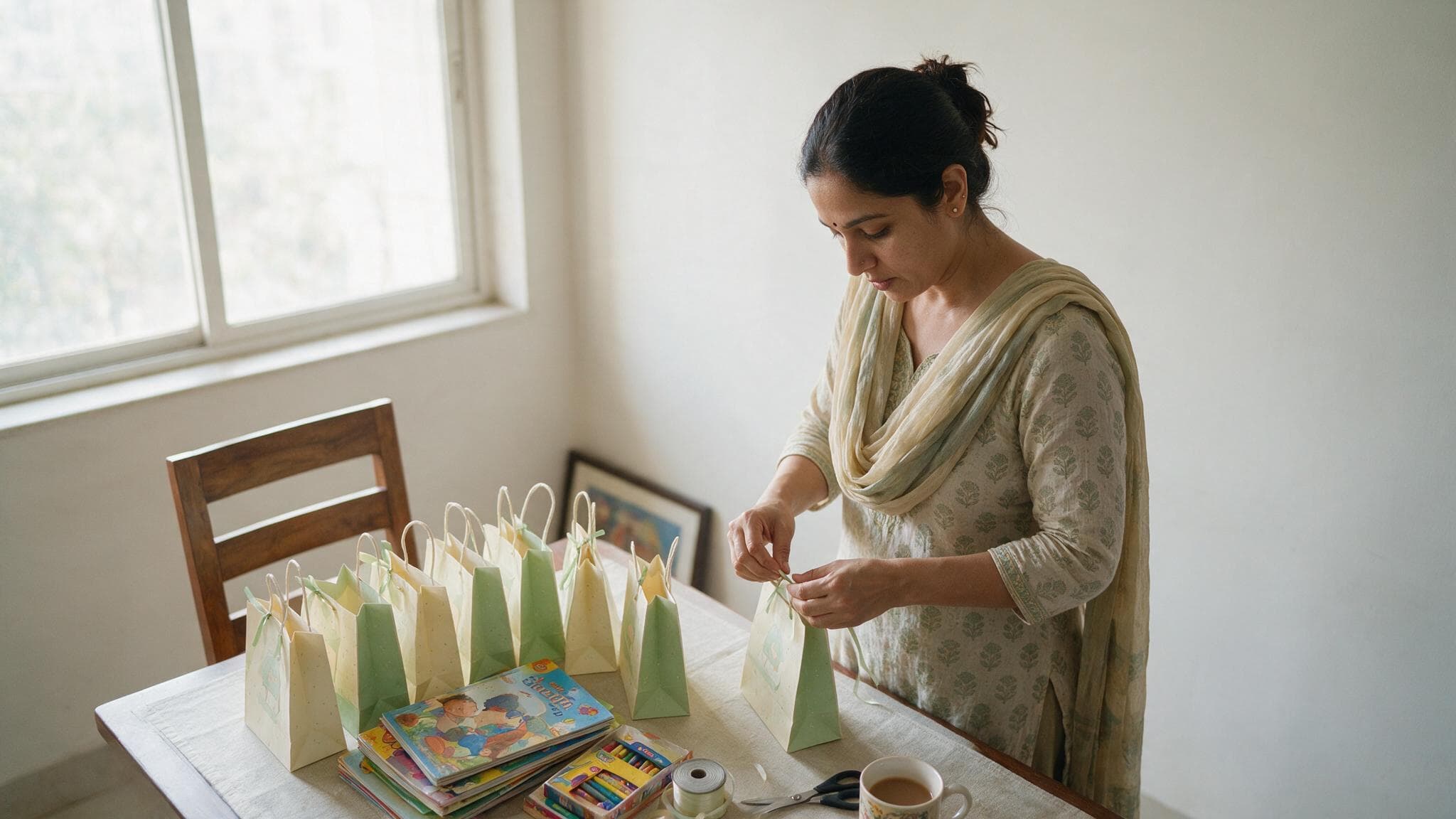
A table of wrapped return gift bags being packed at home before a childrens birthday party

Before choosing anything, it helps to be honest about what a return gift is. It is largely a signal between adults that the party was done properly, which is why the standard version is thirty identical items chosen in a hurry, and why most of them are in a bin within the week. Children remember roughly one thing from a party and it is almost never the bag they left with.

Once that is said plainly the decision gets much easier. Spend the same total on one thing worth keeping rather than five that are not, match it to the actual age, and if you would rather not do return gifts at all, there is a way to skip them that does not read as not having bothered. Budgets below run from ₹50 to ₹500 per child.

The ideas, twelve of them

1.One good thing instead of a bag of five

The instinct is to fill the bag so it looks generous, and the effect is the opposite: five small items read as five pieces of plastic and get treated that way. The same ₹150 spent on a single decent item is the one that survives the week. A bag that rattles impresses the parent at pickup; a single good object is the one the child actually takes to school.


2.Under six: the parents decide, so aim at them

A four year old has no opinion about a return gift and will not remember receiving one. The audience is genuinely the parent carrying it home, so give something that does not create work for them: no loose small parts, no noise, nothing that stains. A decent crayon set, a small plant, or a snack box is welcomed. A whistle is quietly resented for weeks.

3.Six to ten: this is the only age that truly cares

This is the window where children compare bags on the way out and remember whose party had the good ones. It is also the age where a specific thing beats a generic thing: a puzzle, a proper set of sketch pens, a book, a card game. Spend the effort here if you are going to spend it anywhere, because at eleven the whole ritual starts to feel childish to them.

4.Eleven and up: stop giving return gifts

By this age a bag of items at the door is faintly embarrassing for everybody. Replace it with something the group does or eats: better food, an activity that costs money, letting them stay longer. Older children measure a party by what happened rather than by what they carried home, and continuing the ritual past its natural end is money spent making the day slightly worse.

5.Books, and the reason they work here

A book is the one gift that costs the same as the plastic and is treated completely differently at home, because no parent throws one away. Buy one title in bulk rather than choosing individually, pick an age band slightly younger than the guest list to be safe, and accept that a few children already own it. Scholastic-style fairs and wholesale markets make this genuinely cheap.

6.Anything consumable is a safe default

A decent chocolate bar, a small snack box, a homemade sweet in a proper container. It gets used, it creates no clutter, and no parent has ever been annoyed by it. It is also the least memorable option, so use it when the party is large and the budget is thin, which is exactly the situation most people are in.

Rewind template: a scrapbook-style page built for photographs

7.A photograph from the party itself

Take one picture of each child during the party, print them the same week and send them across. It costs almost nothing, it is the only return gift that could not have been bought, and it is the one that ends up on a fridge rather than in a bin. It also gives you an obvious reason to message every parent afterwards, which is half of why the ritual exists.

Keep the party photos somewhere

8.Plants, with one caution

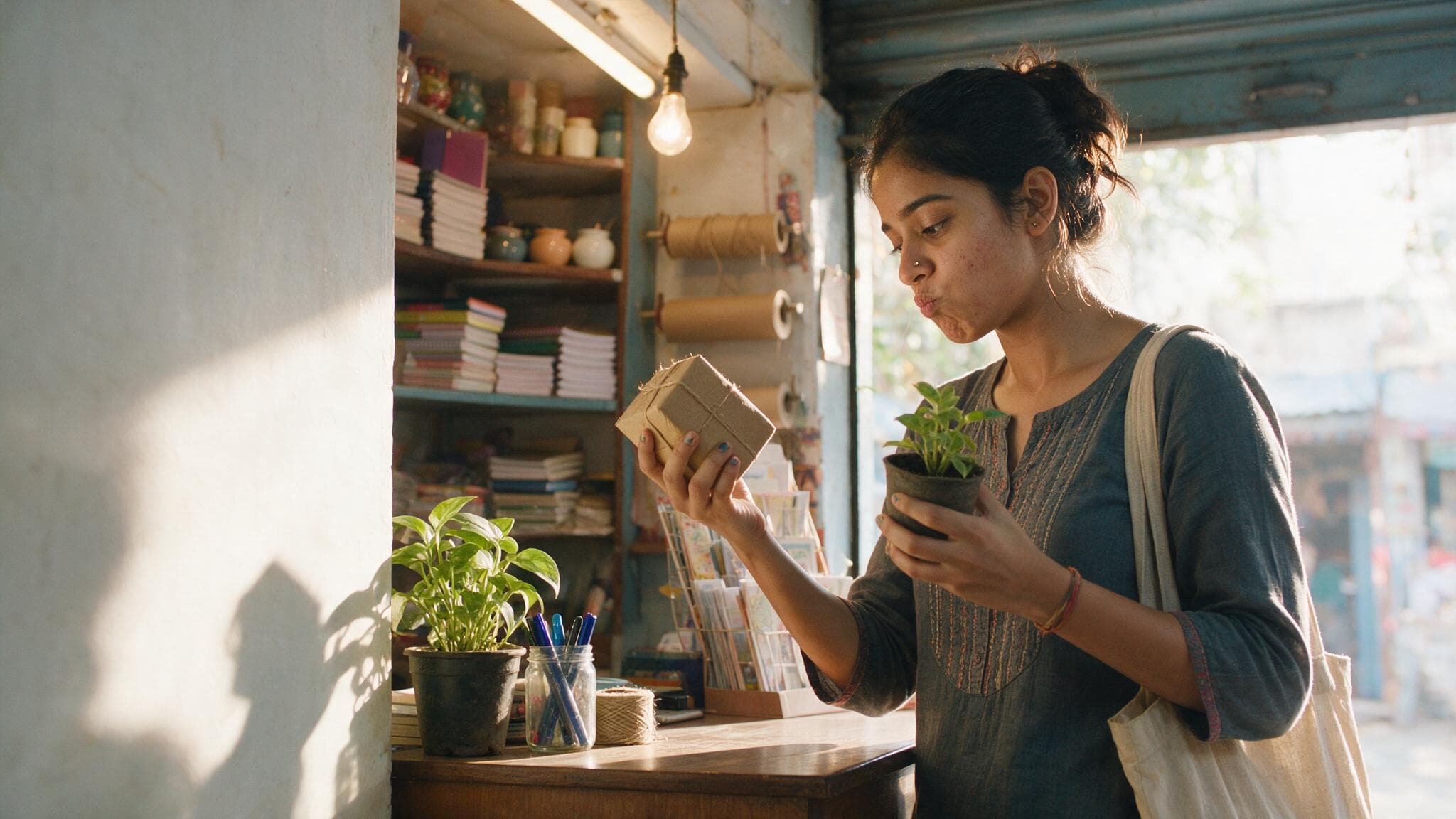
A small succulent or a sapling in a decent pot is inexpensive, looks far more considered than it costs, and lasts. The caution is that it transfers a small ongoing obligation to a household that did not ask for one, so it works well for eight year olds who will enjoy watering something and less well for a party of thirty toddlers.

9.Skip the personalisation with names on it

Name-printed pencils and bottles seem thoughtful and are the single most likely item to be discarded, because a mug with the wrong spelling of a child name is useless to everybody. If you want it to feel personal, hand it over personally at the door with a sentence about that child. That achieves more than any printing and costs nothing.

10.How to skip return gifts without being the family that did not bother

Say what you are doing instead, in advance and in writing. A line in the invitation that you are giving a book to each child, or that you are donating what would have been spent, or simply that there will be a proper meal and no bags, removes all ambiguity. What causes comment is silence, not the absence of a bag, and one sentence in the invite prevents it entirely.

11.Budget honestly across the whole guest list

Thirty children at ₹200 is ₹6,000, which is usually more than the cake, the decoration and the food combined. Work out the total before choosing the item rather than after, because the per-child figure hides how large this line actually is. Very often the right answer is fifteen children at ₹300 rather than thirty at ₹150, and that is a guest-list decision rather than a shopping one.

12.Buy from the wholesale market, not the party shop

Sadar Bazaar in Delhi, Crawford in Mumbai and the equivalent in most cities sell the same items at a third of the retail price, and any large city has a stationery or toy wholesale street. It takes one morning and it is the difference between a ₹75 item and a ₹200 one at the same quality. Going in person also lets you check what actually survives being handled.

Quick answers

What are good return gifts for a birthday party?

One decent item rather than a bag of five small ones, matched to the age. Books work at almost any age because no parent throws one away, consumables are the safe default for a large party on a thin budget, and a printed photograph from the party itself is the only option that could not have been bought.

How much should you spend on a return gift?

Work out the total before the per-child figure. Thirty children at ₹200 is ₹6,000, usually more than cake, decoration and food combined. ₹50 to ₹150 is normal for a large party and ₹300 to ₹500 for a small one, and fifteen children at ₹300 is often better than thirty at ₹150.

Are return gifts necessary at a birthday party?

No, and past about age eleven they are faintly awkward for everybody. If you are skipping them, say so in the invitation and say what you are doing instead, whether that is a book each, a donation, or simply a proper meal. What draws comment is silence rather than the absence of a bag.

What return gifts do children actually keep?

Books, one good art or stationery item, a puzzle or card game, and photographs of themselves at the party. What gets discarded fastest is name-printed items with a misspelling, anything with loose small parts, and bags of several tiny plastic things that read as plastic the moment they are opened.

Turn the idea into the gift.

Photos, your words, their song, and wishes from everyone, on one beautiful page, shared with one link.

Make a birthday page (free)

Keep reading