Adorely

Reference

Happy birthday in twelve Indian languages

By Pash, founder of Adorely · Updated 26 August 2026 · 5 min read

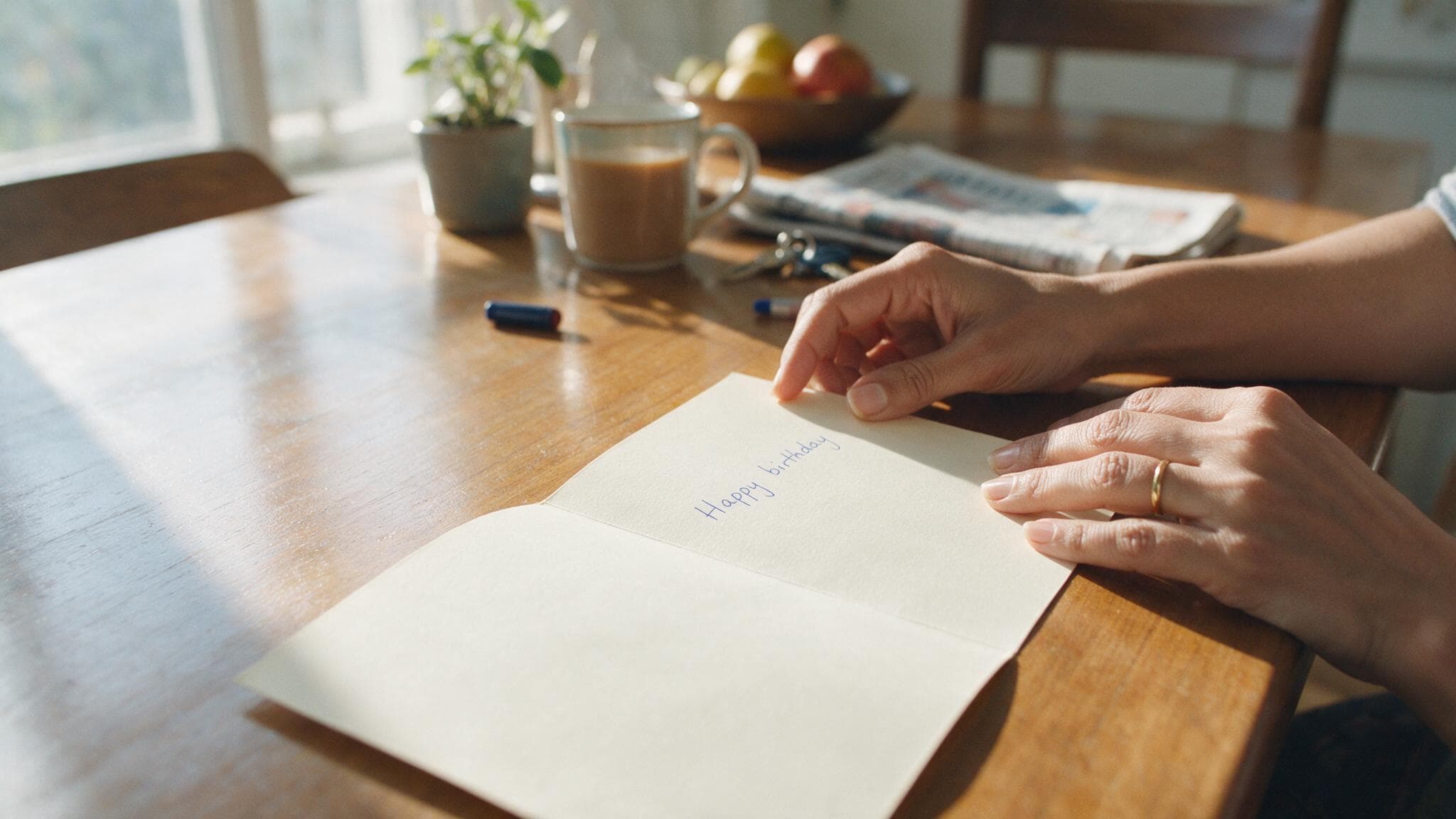
A birthday card being written by hand at a bright kitchen table in an Indian home

The short answer for the twelve largest Indian languages is below, each with the script, a pronunciation guide and the phrase most people actually use. Hindi is जन्मदिन की शुभकामनाएँ, janmadin ki shubhkaamnaayein. Tamil is பிறந்தநாள் வாழ்த்துக்கள், pirandhanaal vaazhthukkal. Bengali is শুভ জন্মদিন, shubho jonmodin. Marathi is वाढदिवसाच्या हार्दिक शुभेच्छा, vaaddivsaachya haardik shubhechchha.

The longer answer is the part that matters and that almost nothing online tells you: most Indian families say happy birthday in English, including to their grandparents, and the regional phrase carries a formality that English does not. Said to a close friend it can sound like a greeting card read out loud. Which phrase to use depends far more on who you are saying it to than on which language you both speak, and that is covered under each one below.

The twelve, plus when to use them

1.Hindi

जन्मदिन की शुभकामनाएँ, janmadin ki shubhkaamnaayein. This is the formal, written form: correct on a card, in a message to an older relative, and in anything a family group will read. Between friends it sounds stiff, and what people actually say is either happy birthday or जन्मदिन मुबारक हो, janmadin mubarak ho, which is warmer and lighter. Both are correct. They are not interchangeable in tone.


2.Bengali

শুভ জন্মদিন, shubho jonmodin. Shorter than the Hindi and much less formal, which means it survives being said out loud between friends in a way the Hindi phrase does not. It is the standard greeting in West Bengal and among Bengali families anywhere, and it is written on cards exactly as it is spoken. The initial sound is closer to "sh" than "s".

3.Marathi

वाढदिवसाच्या हार्दिक शुभेच्छा, vaaddivsaachya haardik shubhechchha. Note the word for birthday: Marathi uses वाढदिवस, vaaddivas, literally the day of growing, rather than the Sanskrit-derived जन्मदिन used in Hindi. Substituting the Hindi word is one of the more common mistakes non-Marathi speakers make, and it reads immediately as translated. हार्दिक, haardik, means heartfelt and is usually kept in.

4.Telugu

పుట్టినరోజు శుభాకాంక్షలు, puttinaroju shubhaakaankshalu. పుట్టినరోజు, puttinaroju, is the everyday word for birthday and is what people say among themselves; the శుభాకాంక్షలు half is the formal greeting and can be dropped in speech between friends. It is the standard written form across Andhra Pradesh and Telangana and is what belongs on a card.

5.Tamil

பிறந்தநாள் வாழ்த்துக்கள், pirandhanaal vaazhthukkal. வாழ்த்துக்கள், vaazhthukkal, is closer to blessings or good wishes than to the English word greetings, which is why the phrase carries more weight than a casual happy birthday and is used freely in writing. In Chennai among younger people, English is overwhelmingly what gets said aloud, and the Tamil is what gets written.

6.Gujarati

જન્મદિવસની શુભકામનાઓ, janmadivasni shubhkaamnaao. Close enough to the Hindi that a Hindi speaker will understand it on sight, and different enough that using the Hindi form to a Gujarati family reads as not having bothered. જન્મદિવસ, janmadivas, rather than the Hindi जन्मदिन is the difference to keep hold of.

7.Urdu

سالگرہ مبارک ہو, saalgirah mubarak ho. Spoken Urdu and spoken Hindi are close enough here that this is understood across most of north India, and मुबारक हो in Devanagari is the same phrase written in the other script. The distinction is almost entirely one of script and register rather than of language, which is worth knowing before treating them as two separate translations.

8.Kannada

ಹುಟ್ಟುಹಬ್ಬದ ಶುಭಾಶಯಗಳು, huttuhabbada shubhaashayagalu. ಹುಟ್ಟುಹಬ್ಬ, huttuhabba, is birthday, built from the words for birth and festival, which is a nicer piece of etymology than most languages manage for this. Standard on cards and in writing across Karnataka.

9.Malayalam

ജന്മദിനാശംസകൾ, janmadinaashamsakal, is the formal written compound and is what appears on printed cards. പിറന്നാൾ ആശംസകൾ, pirannaal aashamsakal, is the warmer everyday version and is the one to use in a message to somebody you know well. Malayalam builds long compound words, so the single-word appearance of the first form is normal rather than a typo.

10.Punjabi

ਜਨਮਦਿਨ ਦੀਆਂ ਮੁਬਾਰਕਾਂ, janamdin diyaan mubaarkaan. Written here in Gurmukhi, which is the script used in Indian Punjab; Punjabi in Pakistan is written in Shahmukhi, and the same spoken phrase looks entirely different on the page. The tone is celebratory rather than formal and it is comfortable said out loud, which is not true of every entry on this list.

11.Odia

ଜନ୍ମଦିନର ଶୁଭେଚ୍ଛା, janmadinara shubhechchha. The script is distinct enough from Bengali and Devanagari that it is worth copying rather than retyping if you are not confident, since a wrong character is much harder to spot in an unfamiliar script than a wrong word is in a familiar one.

12.Assamese

শুভ জন্মদিন, xubho jonmodin. Written in the Assamese script, which shares most of its characters with Bengali, so the phrase looks nearly identical to the Bengali one on the page. It is not pronounced the same: the opening sound in Assamese is closer to an "x" than to the Bengali "sh", and getting that right is most of what distinguishes somebody who knows the language from somebody who copied it.

13.The ten this page does not cover

India has twenty-two scheduled languages and hundreds more without that status. Konkani, Kashmiri, Manipuri, Sindhi, Nepali, Bodo, Santali, Maithili, Dogri and Sanskrit are not here, because a wrong phrase in a language you cannot check is worse than an honest gap. If you need one of them, ask somebody who speaks it rather than trusting any list, including this one.

Love Letter template: an elegant page built for long written messages

14.Before you write it on a card

Transliteration is a guide to sound rather than a spelling, and every phrase above has variants that are equally correct in different regions and families. If it is going on something permanent, show the script to somebody who reads it. A birthday card in the right language with a wrong character is more conspicuous than one written in English, which is the outcome nobody wants after going to the trouble.

Make a page they can read in their own language

Quick answers

How do you say happy birthday in Hindi?

जन्मदिन की शुभकामनाएँ, janmadin ki shubhkaamnaayein, is the formal written form and belongs on a card or in a message to an older relative. Between friends it sounds stiff, and जन्मदिन मुबारक हो, janmadin mubarak ho, or simply happy birthday is what people actually say.

How do you say happy birthday in Tamil?

பிறந்தநாள் வாழ்த்துக்கள், pirandhanaal vaazhthukkal. வாழ்த்துக்கள் is closer to blessings than to greetings, so the phrase carries real weight and is used freely in writing. In speech, particularly among younger people in Chennai, English is what is usually said aloud.

Do Indian families actually wish happy birthday in their own language?

Mostly they say it in English, including to grandparents. The regional phrase is used where the register calls for it: a written card, a message to an older relative, a formal wish, or a family that keeps the language at home. Which phrase fits depends more on who you are addressing than on the language itself.

Is janmadin the right word for birthday in every Indian language?

No, and assuming so is the most common mistake. Marathi uses वाढदिवस, vaaddivas. Telugu uses పుట్టినరోజు, puttinaroju. Kannada uses ಹುಟ್ಟುಹಬ್ಬ, huttuhabba. Substituting the Hindi word into another language reads immediately as translated rather than written.

Turn the idea into the gift.

Photos, your words, their song, and wishes from everyone, on one beautiful page, shared with one link.

Make a birthday page (free)

Keep reading