Adorely

Reference

Indian birthday ceremonies, and the age each one marks

By Pash, founder of Adorely · Updated 24 August 2026 · 5 min read

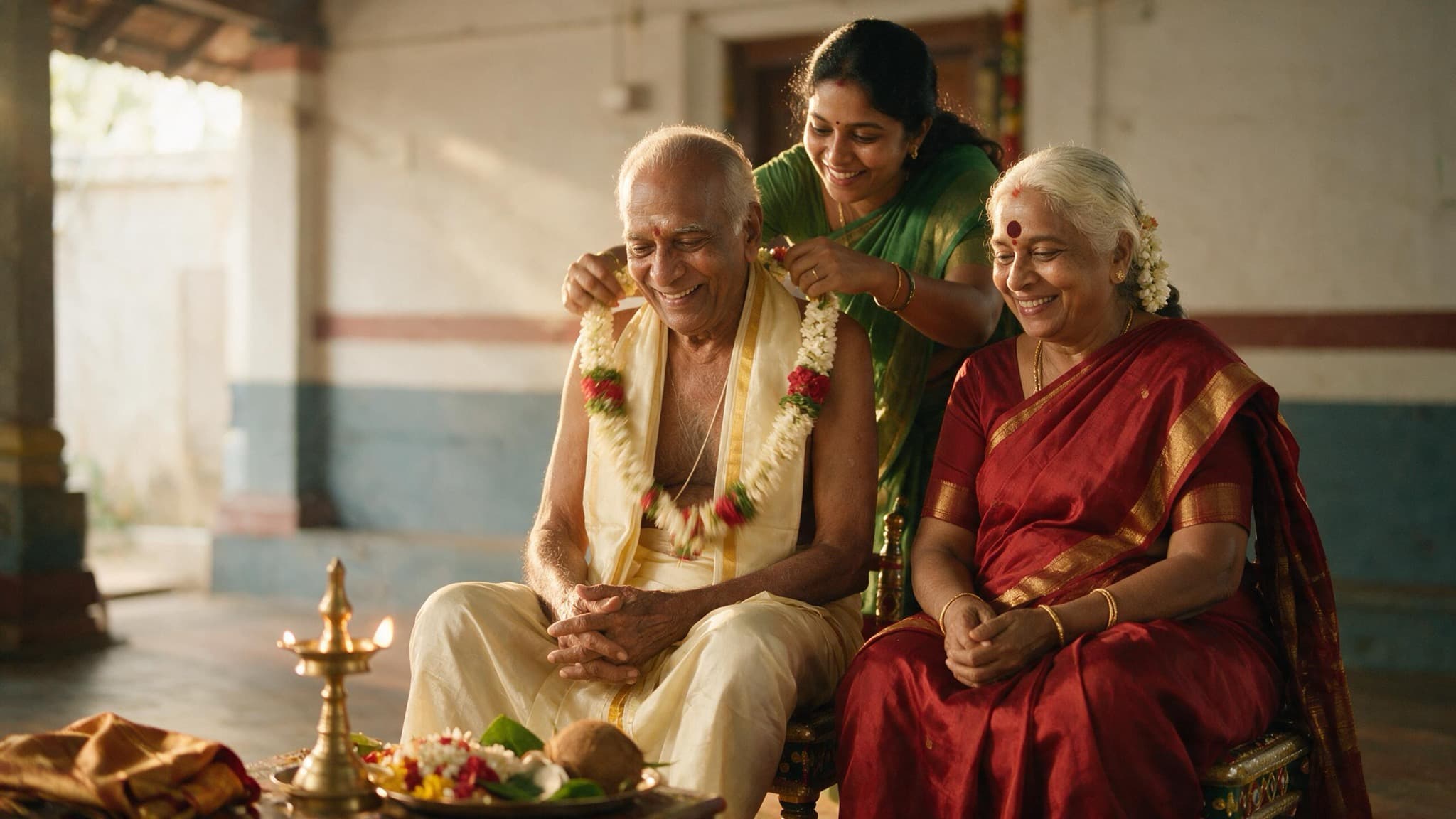
An elderly Indian couple seated together at a family ceremony while a younger relative garlands them

Somebody searching shashtipoorthi is usually planning a real event in the next few months and needs two things: what it is, and when it actually falls. This is a plain reference for both. What each ceremony is called, the age it marks, and which communities keep it.

The single most useful thing to know before anything else: these dates are calculated from the panchang and rarely land on the Gregorian birthday. Fix the date with your family priest before you book anything at all. Every year somebody books a hall for the wrong week.

The ceremonies, by age

1.A note on regions, before the list

The milestone ceremonies below are kept most strongly in South Indian families, Tamil, Telugu, Kannada and Malayali, and among some Maharashtrian and Gujarati communities. Many North Indian families keep none of them and mark a sixtieth or eightieth with a party and a puja instead. Neither is more correct. If your family has never mentioned one, that is normal.

2.The nakshatra birthday, which is not your date of birth

Traditionally your birthday is the day each year when your birth star and the lunar month align, not the Gregorian date. It shifts by a couple of weeks year to year. Many families observe both: the star birthday for rituals and the calendar date for cake. If somebody says the ceremony is on a different day from your birthday, this is why.

3.Ayush Homam, performed on birthdays rather than at one age

A homam for long life and health, performed on a birthday, most commonly for children and often on the nakshatra birthday. It is not tied to a milestone age: some families do it every year, some only in childhood, some at each of the later milestones as well. It is the ceremony most likely to be part of an ordinary birthday.

4.Annaprashan and mundan, which are milestones but not birthdays

Listed because they are searched alongside the others and confused with them. Annaprashan is the first solid food, at around six months. Mundan or chudakarana is the first head shaving, usually between one and three years. Both are samskaras marking a stage rather than an anniversary of birth, so neither is a birthday ceremony in the sense the rest of this list means.

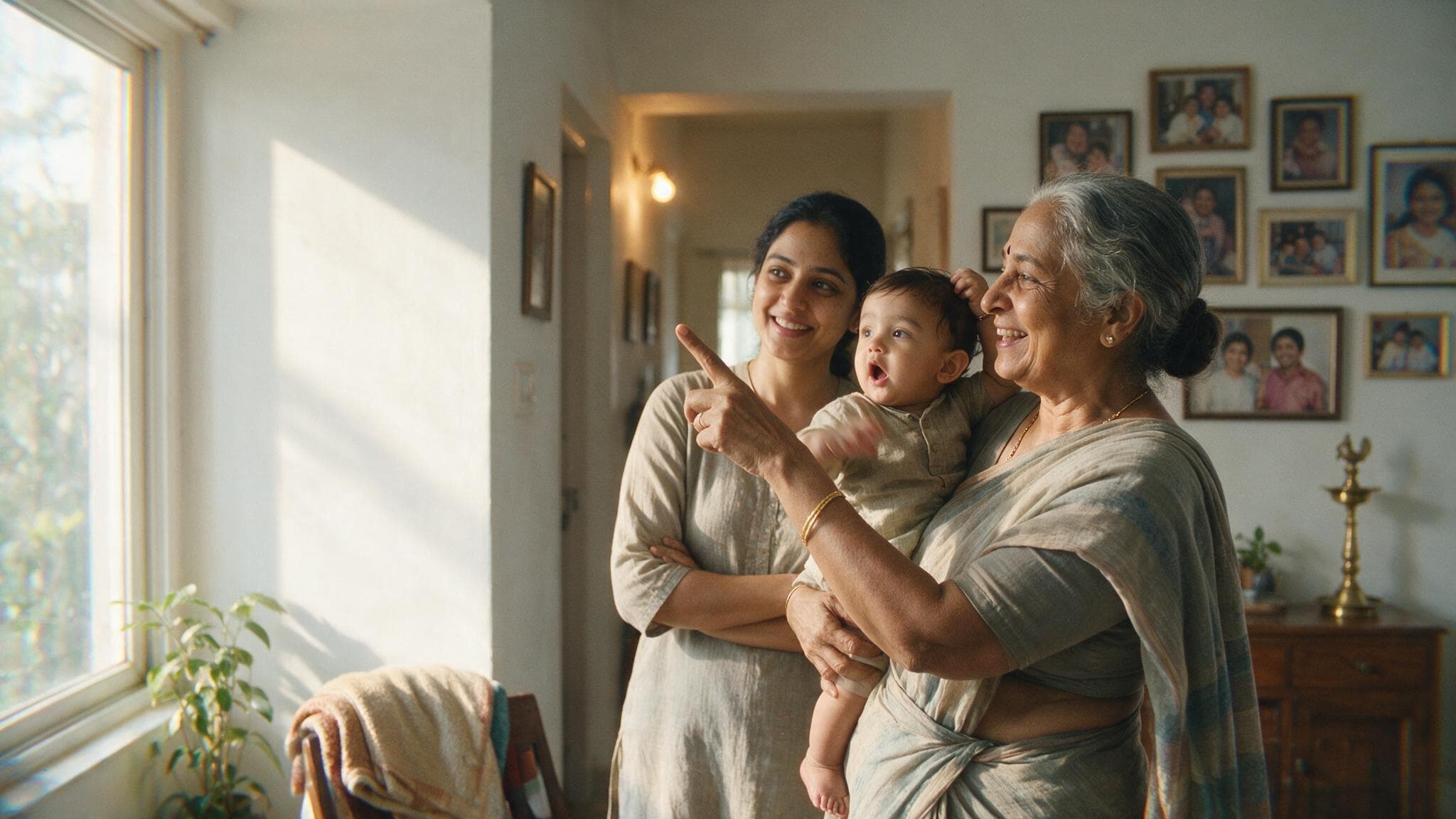
Party Pop template: a bright celebratory page built for lots of photos and short messages

5.The first birthday

The most widely celebrated across the whole country regardless of region, and often the largest gathering a child will have. In many families it is when the extended family is formally introduced to the child. Where mundan has not already been done, it is sometimes performed around this time.

What to write for a first birthday

6.Shashtiabdapoorthi, at 60

Also written shashtipoorthi or sashtiapthapoorthi depending on the language. It marks the completion of sixty years, which is one full cycle of the traditional sixty-year calendar, so the person is understood to begin life again. In many families the couple remarry, with the same rituals as the original wedding and the children hosting. It is the largest of the later ceremonies and the one most families do keep.

7.Bhimaratha Shanti or Ugraratha Shanti, at 70

Marks the completion of seventy years, and in some traditions is reckoned at sixty-nine years and some months rather than on the seventieth birthday, which is exactly the sort of thing to confirm rather than assume. It is observed less widely than the sixtieth and the eightieth, and plenty of families skip it entirely.

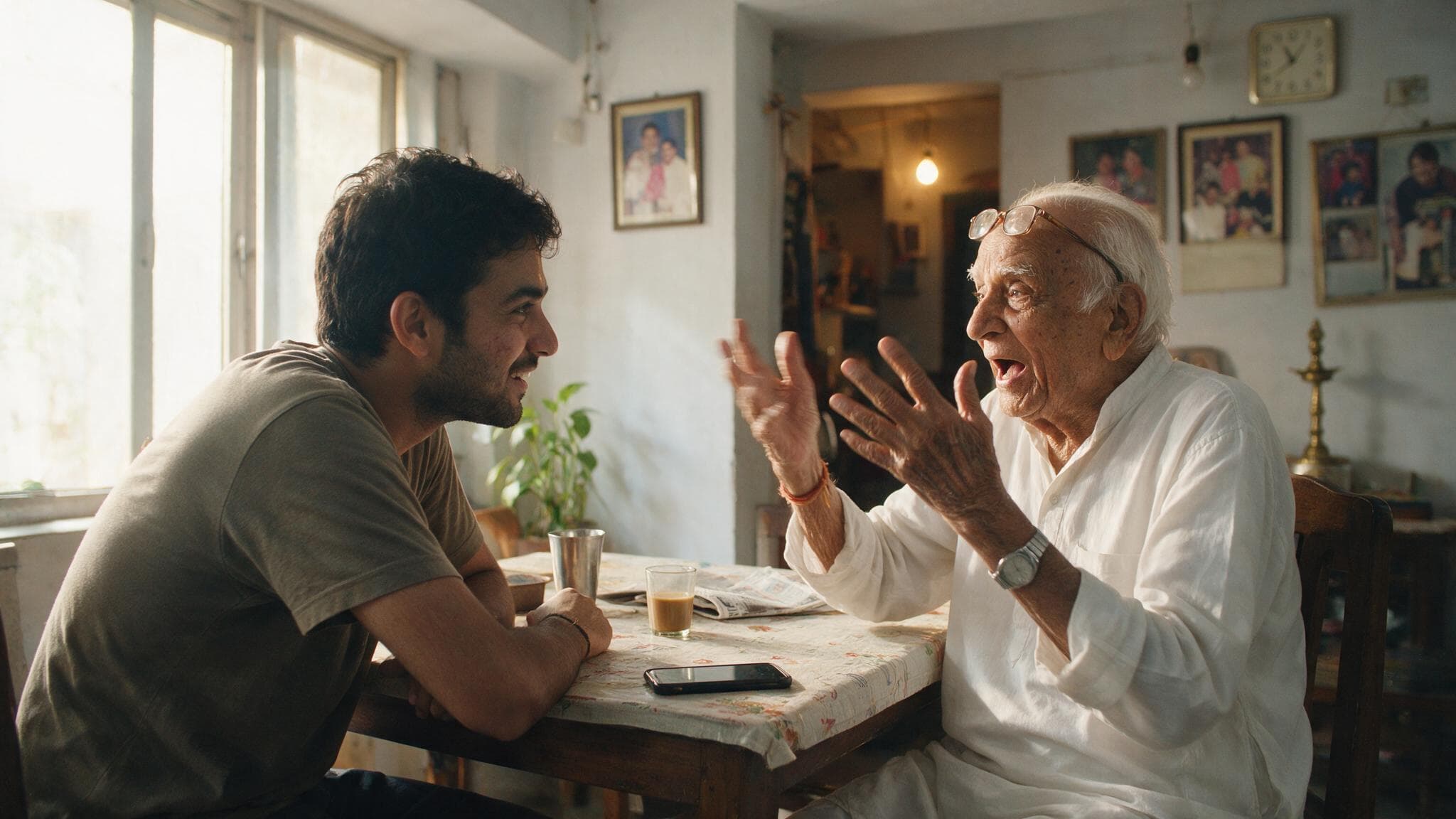
Rewind template: a scrapbook-style page holding old photographs and written messages

8.Sathabhishekam, after a thousand full moons

The most precisely defined on this list and the most frequently miscalculated. It marks having seen one thousand full moons, which falls a little after the eightieth birthday rather than on it, commonly around eighty years and eight months. Some traditions observe it at the eighty-first year instead. It is a large ceremony, often with the couple honoured together, and the date genuinely must be calculated.

9.Kanakabhishekam and other regional observances

Names and practices vary enough between communities that a list like this cannot be complete, and any family may keep a ceremony under a name their neighbours do not use. Kanakabhishekam appears in some traditions as a golden honouring of elders. If your family names one that is not here, that is a gap in this page rather than a mistake in your family.

10.What the family actually has to do

For any of the later ceremonies: fix the date with the priest first, since everything else depends on it and it is not your birthday. Then the venue, then the guest list, which for a sixtieth or eightieth reaches further than a wedding because it includes everybody who knew them at every stage. Give yourself two months, not two weeks.

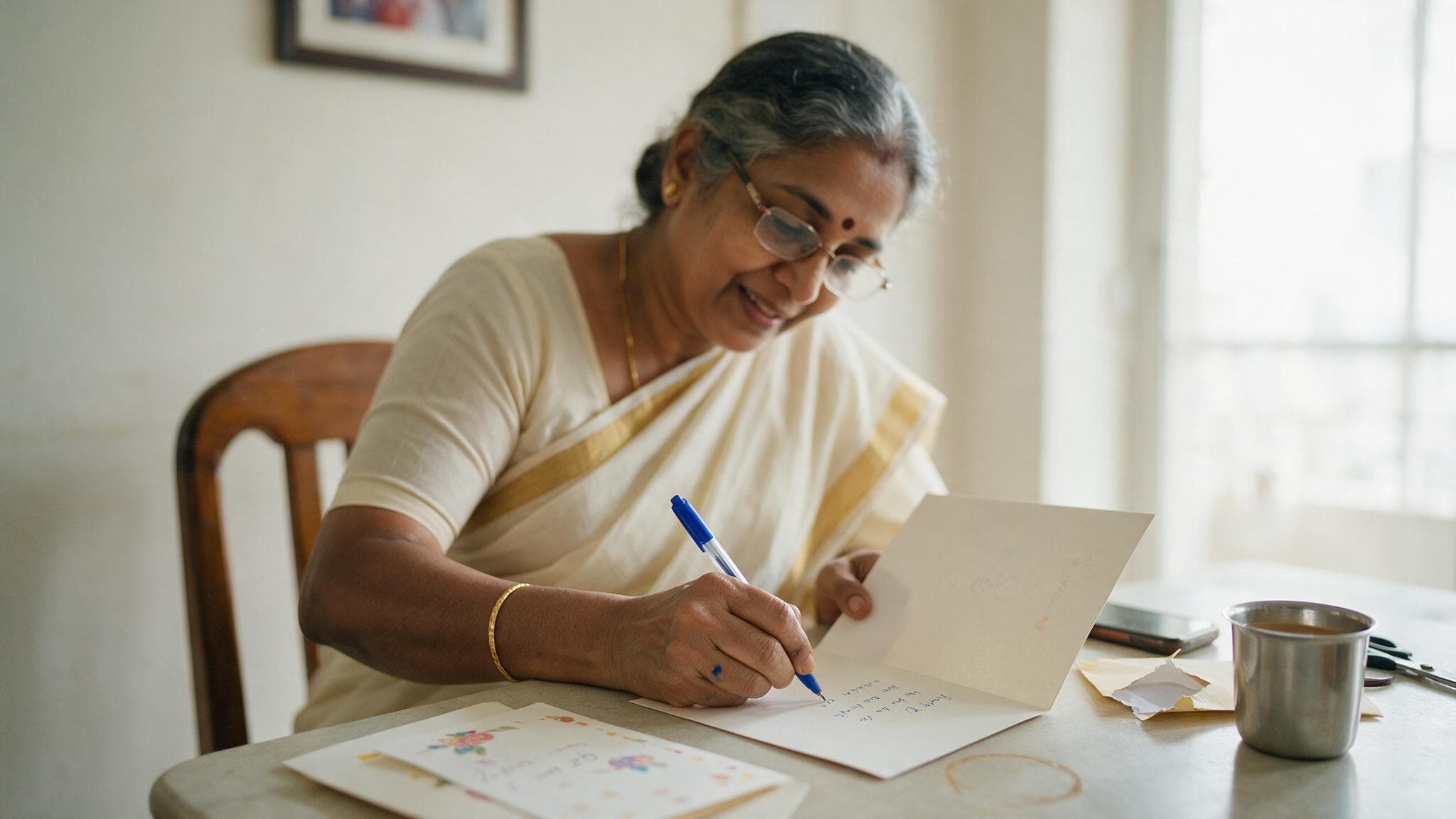
Love Letter template: a soft, personal page built around one long written message

11.The part nobody plans and everybody regrets

These ceremonies are photographed heavily and recorded almost never. The people being honoured are in their sixties, seventies and eighties, surrounded for one day by everybody who has known them, and nobody thinks to collect what any of those people would say. Ask each guest for a few sentences beforehand and you have the one thing the day itself does not produce.

Collect what the family would say

Quick answers

What is shashtipoorthi?

The ceremony marking the completion of sixty years, also written shashtiabdapoorthi or sashtiapthapoorthi. Sixty completes one full cycle of the traditional calendar, so the person is understood to begin again, and in many families the couple remarry with the children hosting. It is kept most strongly in South Indian families.

When is sathabhishekam performed?

After the person has seen one thousand full moons, which falls a little after the eightieth birthday rather than on it, commonly around eighty years and eight months. Some traditions observe it in the eighty-first year instead. It has to be calculated from the panchang, and it is the ceremony most often booked for the wrong date.

Is my nakshatra birthday different from my date of birth?

Usually yes. The traditional birthday is the day each year when your birth star and the lunar month align, which shifts by a couple of weeks year to year and rarely matches the Gregorian date. Many families observe both, using the star birthday for rituals and the calendar date for the celebration.

Does every Hindu family perform these ceremonies?

No. They are kept most strongly in South Indian families and among some Maharashtrian and Gujarati communities. Many North Indian families keep none of them and mark a sixtieth or eightieth with a puja and a party instead. If your family has never mentioned one, that is normal rather than an omission.

Turn the idea into the gift.

Photos, your words, their song, and wishes from everyone, on one beautiful page, shared with one link.

Make a birthday page (free)

Keep reading